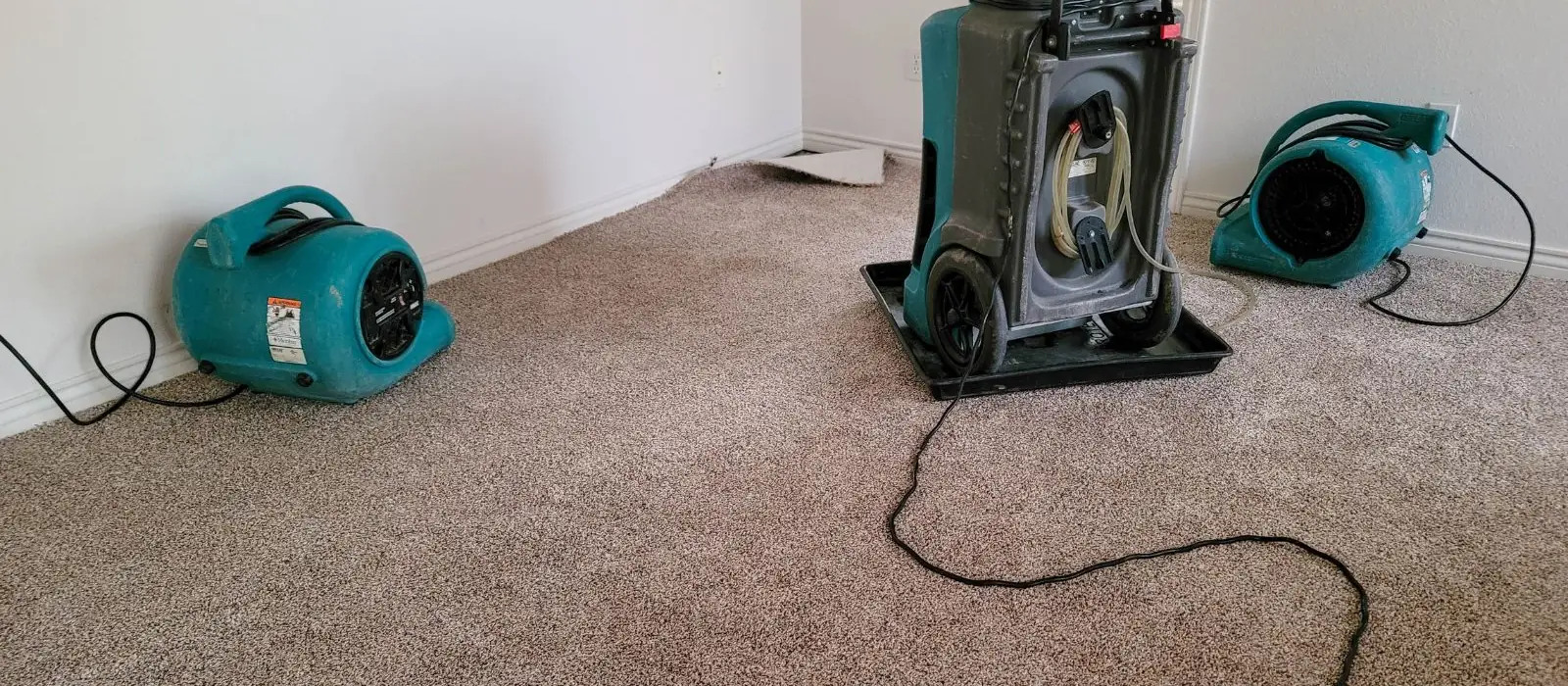
Wet carpet is a race against time and water type. Carpet water damage in Northborough, MA that comes from a clean source and is caught early can often be dried in place. Carpet soaked with sewage or flood water, or left wet for days, is usually discarded.
The carpet itself matters less than the pad and the subfloor under it. Pad acts like a sponge, and the subfloor holds moisture long after the surface feels dry.
Save or replace: a quick guide
| Situation | Usual decision | Reason |
|---|---|---|
| Clean supply line leak, caught within a day | Often dried in place | Clean water and fast action |
| Washing machine overflow, wet for two to three days | Case by case | Moisture and bacteria build |
| Sewage or drain backup | Replace carpet and pad | Contaminated, bacteria in backing |
| Flood water from outside | Replace carpet and pad | Silt and bacteria |
| Wet for more than a few days | Often replace | Mold risk and backing damage |
How carpet is dried
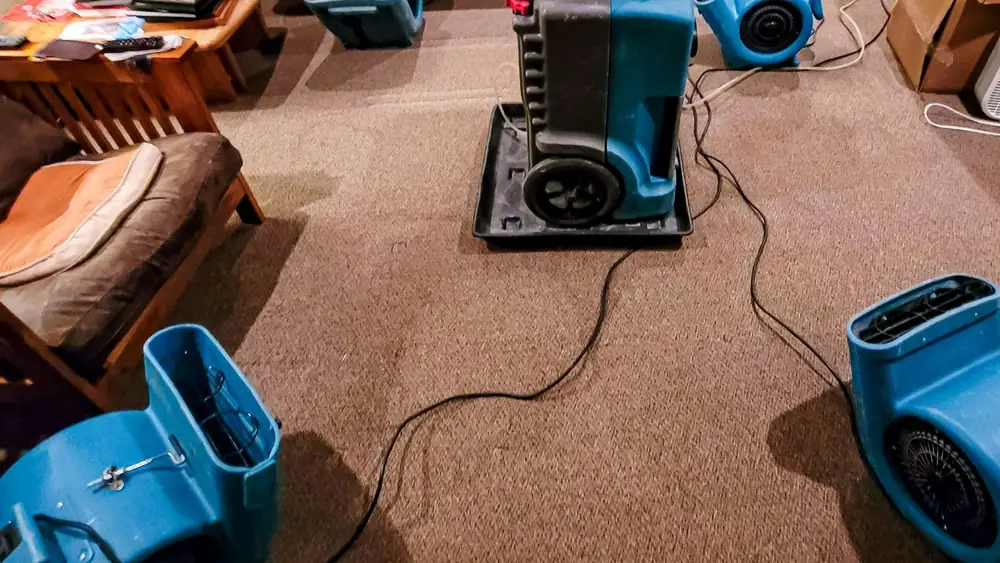
The crew starts with extraction, pulling water out with a powerful extraction unit. They then lift a corner of the carpet, remove or sometimes dry the pad and set air movers underneath, so air moves across both the carpet backing and the subfloor.
Dehumidifiers pull the moisture out of the air so the carpet and floor can release theirs. Readings on the subfloor confirm when it is dry. Walking on a damp carpet pushes water back into the pad, so keep foot traffic off until the crew says otherwise.
What you can do in the first hour
Stop the source. Remove small furniture and put foil or plastic under the legs of heavy pieces. Mop standing water with towels, and ventilate the room if it is dry outside. Do not use a household vacuum on wet carpet, because of the shock risk.
Photograph the area before you start. If the water came from a drain or the outdoors, stay out of it and call, because that water may carry bacteria.
When the carpet is not the problem
The subfloor and the tack strip can hold moisture under dry-looking carpet. Hardwood below a carpeted stair or a plywood subfloor can cup or swell. If you smell dampness days later, readings will tell you whether the floor needs more drying.
A finished basement is the typical case. Concrete holds water for days and sends it up into the carpet pad. For that, see flood damage restoration, and for the cleanup that follows, see water damage cleanup.
Mold and odor
The EPA advises drying water-damaged items within 24 to 48 hours to prevent mold. After that window, a musty smell from carpet is a sign that moisture is still present. Deodorizers hide the smell and do not dry anything.
Why the pad matters more than the carpet
Carpet is a surface layer. The pad underneath is a thick sponge, and it holds water, bacteria and odor long after the top feels dry. Foam and rebond pad both soak up water, and neither dries quickly once saturated.
This is why many crews replace the pad even when they save the carpet. The pad is inexpensive compared with the labor to dry it, and a wet pad can keep the subfloor damp for days. If the pad is replaced, the carpet is lifted, dried and stretched back into place.
Drying steps that actually help
- Remove standing water with towels or a wet vacuum rated for water, and keep the area clear of foot traffic
- Lift furniture and place foil or plastic under any legs that must stay
- Open windows if the outdoor air is dry, and run a dehumidifier in the room
- Aim fans along the surface of the carpet, not at the wall
- Do not turn the heat up and seal the room, since warm damp air feeds mold
- Call for moisture readings if the carpet is still damp after a day
These steps buy time. They do not replace a moisture reading on the subfloor, because a dry-feeling carpet over a damp pad is how a smell appears two weeks later.
Stairs, bedrooms and wall-to-wall carpet
Carpet that runs up a staircase wicks water along the tackless strip and into the framing, and carpet in a bedroom over a basement can pull water through the subfloor. The crew will test each room separately, because one wet room does not mean all are wet.
Carpet tiles dry more easily than wall-to-wall carpet because each square can be lifted and dried on its own.
Northborough note: finished basements and sewer backups
A finished lower level is common in Northborough houses, and carpet in a basement is the most frequent victim of seepage and sump failure. If the water came from a sewer backup, the town's Department of Public Works regulates sewer matters through its Sewer Commission, and the DPW can tell you whether the blockage is in the town main or on your own line.
That distinction decides who clears it and who to ask about cleanup costs. Homes in Marlborough and Shrewsbury work through their own city and town offices.
Questions Northborough Homeowners Ask
Who do I call in Northborough about a sewer backup?
The Town of Northborough Department of Public Works handles sewer matters through its Sewer Commission. Call them to find out whether the blockage is in the town main, and call a restoration company for the carpet and cleanup.
How long can carpet stay wet before it has to be replaced?
There is no single deadline, but the EPA's 24 to 48 hour window for drying is a useful guide. After that the risk of mold and backing damage rises quickly.
Is the pad always replaced?
Often, because pad is cheap relative to the labor of drying it and it holds contaminants. The carpet itself may be saved when the water was clean.
Can I dry carpet with fans and a box dehumidifier?
You can start, but without moisture readings you will not know if the pad and subfloor are dry. A professional unit also moves far more air.
Carpet soaked? Call before it sits another night.
☎ Call (508) 446-9244