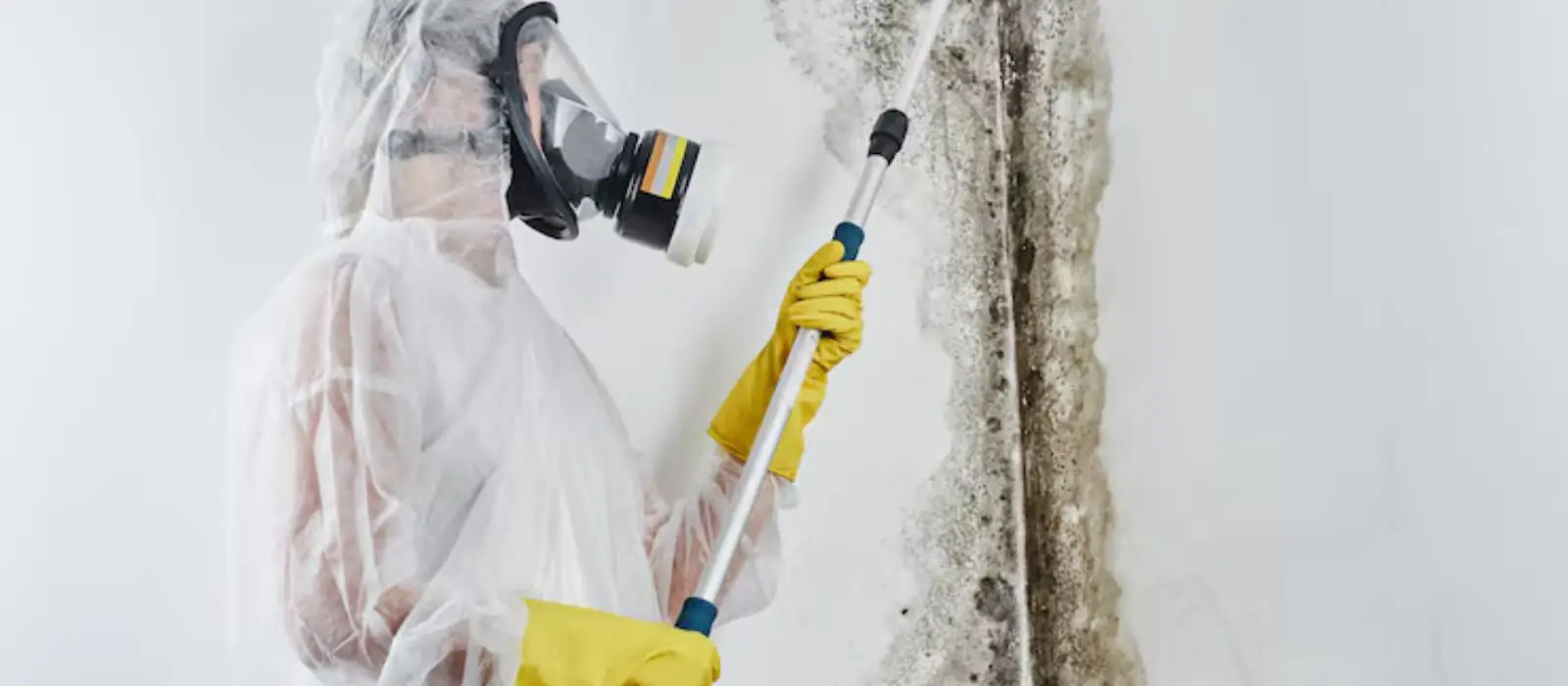
Mold remediation in Northborough, MA means finding the moisture that fed the mold, containing the area, removing contaminated material and drying the structure so it does not return. It is a secondary service for us, and it follows water damage more often than it stands alone. Call the 24/7 line to book an inspection.
If you see mold, do not scrub it dry or blow a fan across it. That spreads spores. Stop the water source first, close the door of the room and keep the HVAC from pulling air through it.
Mold in the bathroom, closet or basement ceiling
Most mold calls start with a leak. An upstairs toilet leaks onto a finished basement ceiling. A condensation line backs up. A roof leak soaks a closet wall. Mold often shows up weeks later as dark patches at the corner of a shower ceiling, behind a pulled-out sofa or on the back of a closet wall.
The EPA's brief guide to mold says none of the many types will grow without moisture, and that wet areas and items should be dried inside 24 to 48 hours. That is why water mitigation matters before anything else, and why no mold treatment works if the leak is still active.
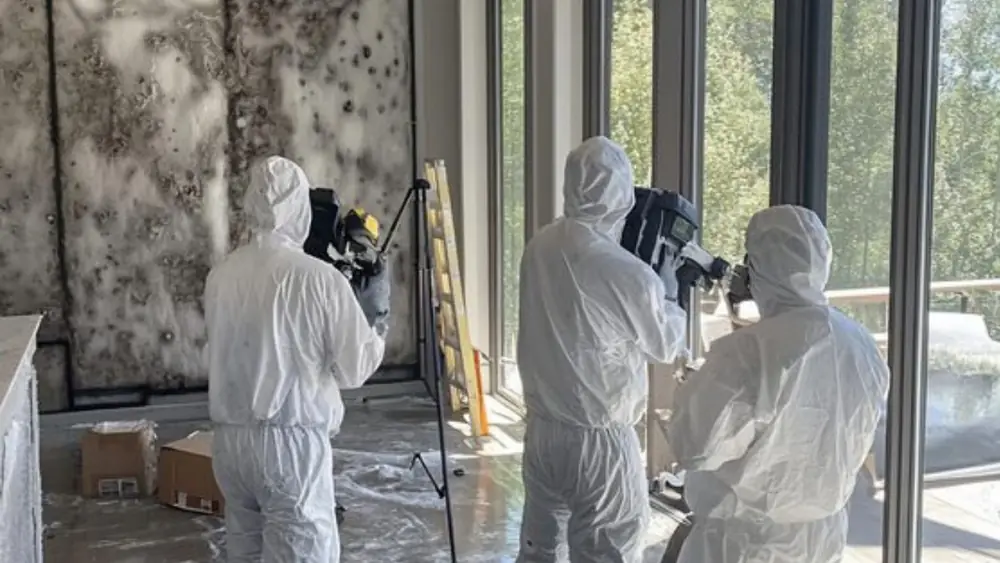
What mold remediation involves
- 1
Inspect and find the moisture source
The crew uses moisture meters and, where needed, a thermal camera to find the wet area, because mold follows moisture.
- 2
Contain the work area
Plastic barriers and negative air keep spores from spreading to the rest of the house.
- 3
Remove contaminated material
Porous items such as drywall, insulation and carpet are bagged and removed. Framing is cleaned.
- 4
Dry the structure
Dehumidifiers and air movers bring the materials back to dry readings.
- 5
Verify the result
A visual check and moisture readings confirm the area is clean and dry. Independent clearance testing is a separate step.
Testing, inspection and independent clearance
Homeowners ask whether testing is needed before removal, and the answer depends on the situation. Visible mold that follows a known leak often goes straight to remediation. Musty smells with no visible source are better served by an inspection that finds the moisture.
Clearance testing is done by an independent tester, not by the company that did the removal. It checks that the area is clean and is commonly requested for insurance, tenancies and home sales. We cannot promise what a lender or buyer will accept.
Real estate calls are common. A buyer's lender may ask for mold to be addressed before closing, and the safest approach is to remediate, document with photographs and clearance results, and let the lender decide what it accepts.
Mold removal and black mold cleanup
Color does not tell you how serious mold is. "Black mold" is a name people use for many dark molds, and the response is the same for all: fix the water, contain the area and remove the contaminated materials. Questions about health effects belong with a physician.
For small areas, the EPA's guidance is that a homeowner can handle limited cleanup on hard surfaces with detergent and water, and that areas larger than about 10 square feet call for a professional. Porous materials such as drywall and ceiling tile are usually replaced.
Mold after water damage
Mold after a water loss usually means the drying was late or incomplete. Wet insulation, a damp subfloor or a wall cavity that was closed too soon can all hold moisture for weeks. A repeat inspection with a moisture meter finds those spots.
If you are in the middle of repairs, ask whether the area was dried to a reference reading. If it was not, water damage repair should pause until it is.
| Situation | Likely response |
|---|---|
| Small spot on a hard surface, leak fixed | Detergent and water cleanup, then monitor |
| Mold on drywall or ceiling after a leak | Containment, removal of affected drywall, drying |
| Musty smell, nothing visible | Inspection with moisture meter, find the source |
| Mold in HVAC or ductwork | Specialist assessment, do not run the system |
| Sale or loan requires clearance | Remediation, then independent clearance testing |
What to do before remediation starts
- Fix the water source first, because cleaning mold without stopping the moisture only buys a short delay
- Do not disturb or dry-brush visible growth, which spreads spores into other rooms
- Do not run a fan across the area or seal it with paint or a coating
- Wear an N95 respirator, gloves and goggles if you must go into the room
- Photograph the area and keep the plumbing or roofing repair records for your insurer
What affects the cost of mold remediation
The key factors are the size of the affected area, the materials involved, how hard the area is to contain, the need for testing or clearance and how long drying takes. Pricing is explained before work starts, and it often changes once drywall is opened.
Insurers often treat mold as a result of the original cause. If a sudden event caused the water, mold may be part of the claim. If it came from a slow leak, it may not. Check your policy or ask your insurer.
Book an inspection by calling (508) 446-9244.
☎ Call (508) 446-9244Licensing and what to ask
Ask whether your state licenses mold work, and ask any company whether its crews follow ANSI/IICRC S520, the published standard for mold remediation. Also ask who will do clearance testing and whether it is independent of the company doing the work.
If the mold followed a flood, read about flood damage restoration. Neighbors in Westborough and Marlborough can reach the same line.
Mold Remediation Questions
How do I know if I have mold if I can only smell it?
A musty smell usually means moisture is present somewhere. An inspection with a moisture meter and, if needed, a thermal camera finds the source. Testing is a separate decision.
Can I just clean mold with bleach?
For small hard-surface areas, the EPA recommends detergent and water. Bleach does not fix the moisture problem and should never be mixed with other cleaners. Porous materials cannot be cleaned effectively and are removed.
What if my lender will not close until the mold is removed?
Remediation, documentation and independent clearance testing are the usual path. We cannot promise what a lender will accept, so ask the lender what it requires.
Do you offer independent clearance testing?
Clearance testing is done by an independent tester so the result is not a conflict of interest. We can help you plan the sequence and recommend that you hire the tester separately.
Will mold come back after remediation?
It depends on moisture. If the leak is fixed and the structure is dried and kept dry, there is no moisture to feed it. No one can promise it will never return.
Seeing or smelling mold? Call and book an inspection.
☎ Call (508) 446-9244