Emergency water mitigation in Northborough, MA is the work of stopping water damage from spreading while it can still be contained. Our dispatch line is open 24/7, and crews respond the same day when available, including nights and weekends. Mitigation comes before repair because wet drywall, insulation and subfloor keep absorbing moisture for as long as they stay wet.
While you wait for a crew, shut off the water at the main valve. Switch off power to wet areas only if you can reach the panel without stepping in water, and lift rugs, electronics and paper off the floor. If water is near outlets or you smell gas, leave the building and call 911 or the utility before you call us.
Wet wall, soft floor or a musty smell? Start here
Most people do not search for mitigation. They search for a ceiling stain that keeps growing, a basement that smells musty, or carpet that is still damp days after a leak. Each of those is the visible end of water that has moved into materials you cannot see.
Water mitigation is the trade name for finding that hidden water, removing it and drying the structure before mold or rot gets a foothold. If you can see a stain, feel a soft spot or smell dampness, the water is usually still present somewhere nearby.
When a leak or standing water is an emergency
Treat it as an emergency when water is still running, when it is deeper than the baseboards, when it has reached a ceiling light fixture or an electrical panel, or when the water is gray or black from a drain or sewer. The same goes for any soaking that has lasted a full day on carpet pad or insulation.
In each of those cases, waiting until morning costs more than calling now. A dispatcher will ask what the source is, how far the water has traveled and whether anyone is at risk, then send a crew as soon as one is available.
What water mitigation involves, step by step
- 1
Stop the source and assess
The crew confirms the source is off, checks the water category and decides what can be dried in place and what has to come out.
- 2
Map the moisture
Moisture meters and thermal imaging show which walls, floors and ceilings are wet, including areas that look dry on the surface.
- 3
Extract standing water
Pumps and extraction units remove what can be pulled out, which is far faster than drying it.
- 4
Remove what cannot be saved
Soaked carpet pad, wet insulation and swollen drywall are cut out when drying them would take longer than replacing them.
- 5
Set drying equipment
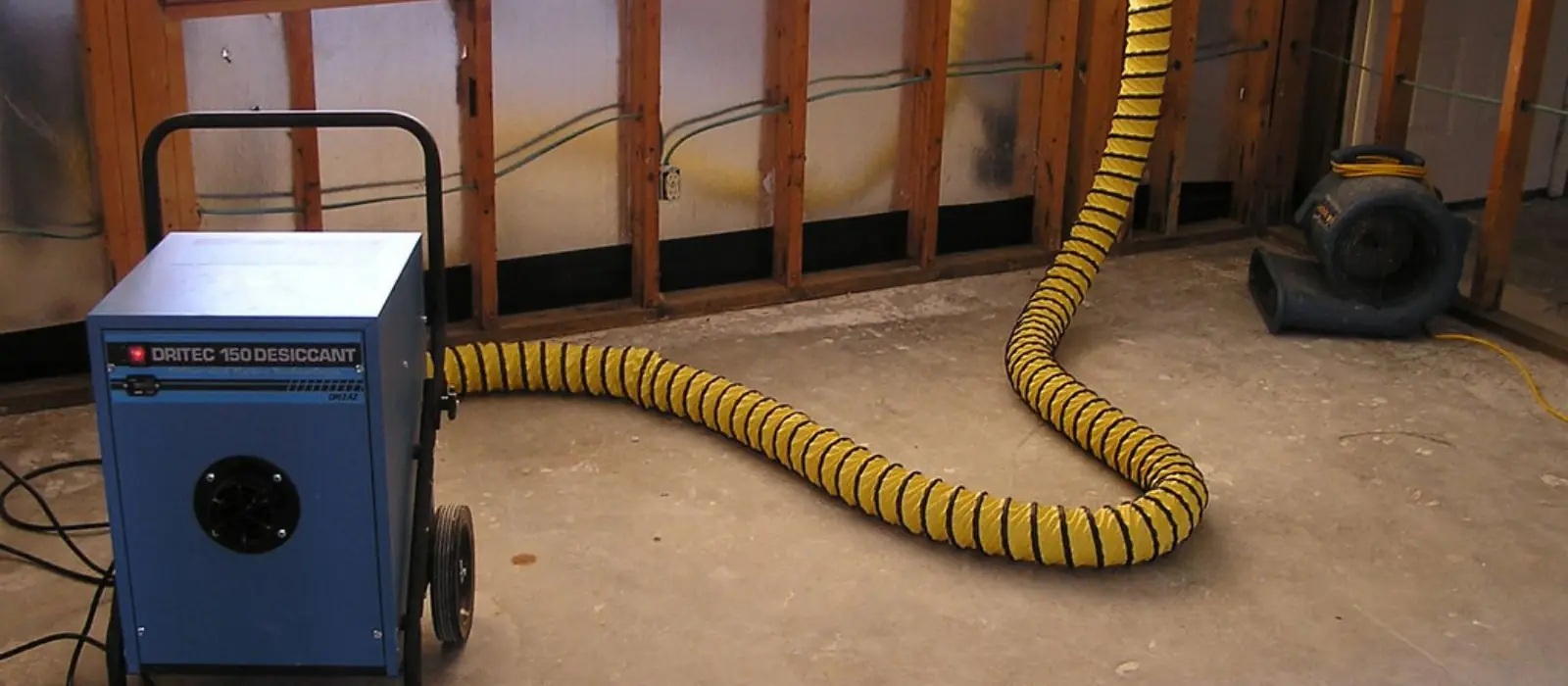
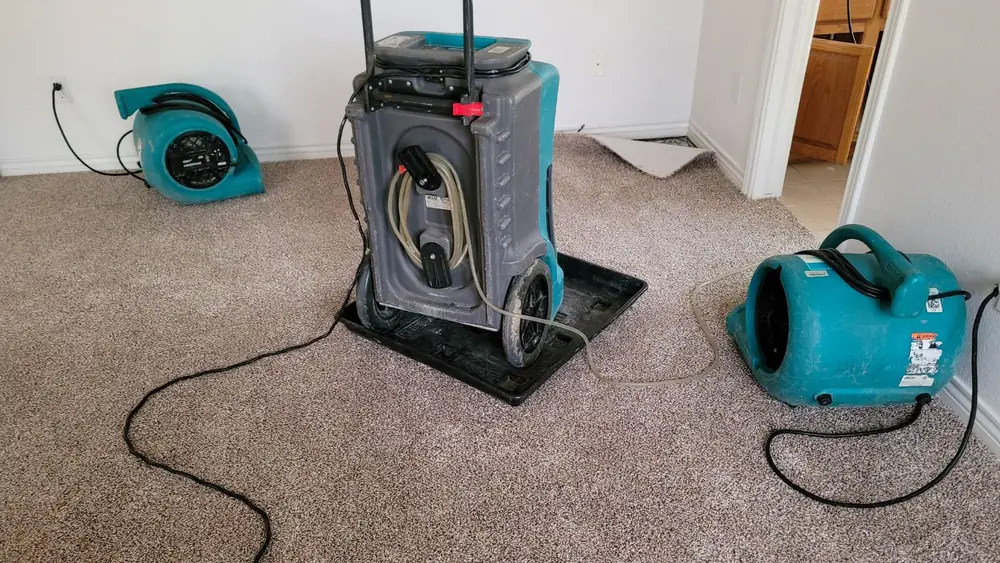
Air movers and LGR dehumidifiers go in, placed by what the moisture map showed, and containment keeps the humidity from spreading.
- 6
Monitor until dry
Readings are taken on each visit until the materials match an unaffected dry reference, and then the equipment comes out.
Structural drying: how crews know a wall is dry
Structural drying is the part of mitigation that takes days instead of hours. Air movers push dry air across wet surfaces while LGR dehumidifiers pull the moisture out of the room, and the crew opens wall cavities or drills small holes when trapped moisture needs a path out.
Dryness is measured, not guessed. A technician compares readings in the wet area against readings from the same material in an unaffected room, and drying is finished when the two match. ANSI/IICRC S500 is the published standard for water damage restoration, and you can ask any company whether its crews work to it.
Most structural drying runs for several days, and the equipment will be loud and warm. Moving it early to save on noise is how a wall that tested dry on Tuesday turns up damp on Friday.
Water categories and what they change
| Category | Typical source | What changes in the work |
|---|---|---|
| Category 1 | Broken supply line, overflowing sink, melting ice | Extraction and drying, often with most materials kept |
| Category 2 | Washing machine or dishwasher discharge, toilet overflow without solids | Extraction, cleaning and treatment, more materials removed |
| Category 3 | Sewage, river or groundwater flooding, long-standing water | Protective gear, removal of porous materials, disinfection, see flood damage restoration |
Safety first when water meets electricity
Never wade into standing water if a basement outlet, power strip or panel could be submerged. Cut power at the panel only if you can reach it from dry footing. Otherwise stay out and call the utility or 911 before you call a restoration company.
Keep children and pets out of any water that came from a drain, toilet or outdoor flooding.
What affects the cost of water mitigation
Pricing is set by the job, so it is explained before work starts. Five things move the number most: the water category, how many square feet are wet, which materials are involved, how many days of drying equipment the moisture readings call for, and how much has to be removed before rebuilding.
Water mitigation is often handled under the sudden and accidental part of a homeowners policy, while slow leaks and neglected repairs are often excluded. Read your policy or ask your insurer which applies, and photograph the damage before anything is moved.
Want your real number? Call (508) 446-9244 and describe what you see.
☎ Call (508) 446-9244Mitigation in Northborough: who owns what
Northborough buys its water from the MWRA, whose 2022 community letter for the town describes one metered connection feeding the local system, and the town carries it from there. Who owns what matters at 2 a.m. If water is coming up through the street side of your meter, call the town's water division. If a supply line or fixture inside your walls has failed, close your own main and call us.
Once the water is stopped, the next job is usually water damage cleanup for anything contaminated, then water damage repair to rebuild. If damp materials have been wet for more than a day or two, our mold remediation page explains why speed matters. Crews also work across the line in Westborough when a call comes from there.
Water Mitigation Questions
Do you handle water mitigation emergencies at night or on weekends in Northborough?
Yes. Dispatch answers 24 hours a day, every day of the year, and after-hours calls are treated as emergencies when water is active. Crews respond the same day when one is available, and the dispatcher will tell you honestly if there is a wait.
My ceiling has a brown stain that keeps growing. Is that a mitigation job?
Usually yes. A stain that grows means water is still arriving or is still trapped above the ceiling. Mitigation finds the source, opens the ceiling if needed and dries the cavity, which is a different job from painting over the stain.
What is the difference between water mitigation and water damage repair?
Mitigation stops the damage and dries the structure. Repair rebuilds what had to be removed, such as drywall, flooring and paint. Mitigation always comes first, because rebuilding over wet materials traps the moisture.
How long does structural drying take?
Several days is common, and the moisture readings decide the end date rather than a calendar. Thicker materials, hardwood and wet insulation take longer, and a cold, humid week slows everything down.
Can I just rent a dehumidifier and dry it myself?
A household dehumidifier can lower room humidity, but it does not reach water inside wall cavities or under flooring. Without a moisture meter you cannot tell when a wall is dry, so a damp stud can be closed back up and cause mold later.
Water spreading right now? Dispatch is open tonight and every night.
☎ Call (508) 446-9244