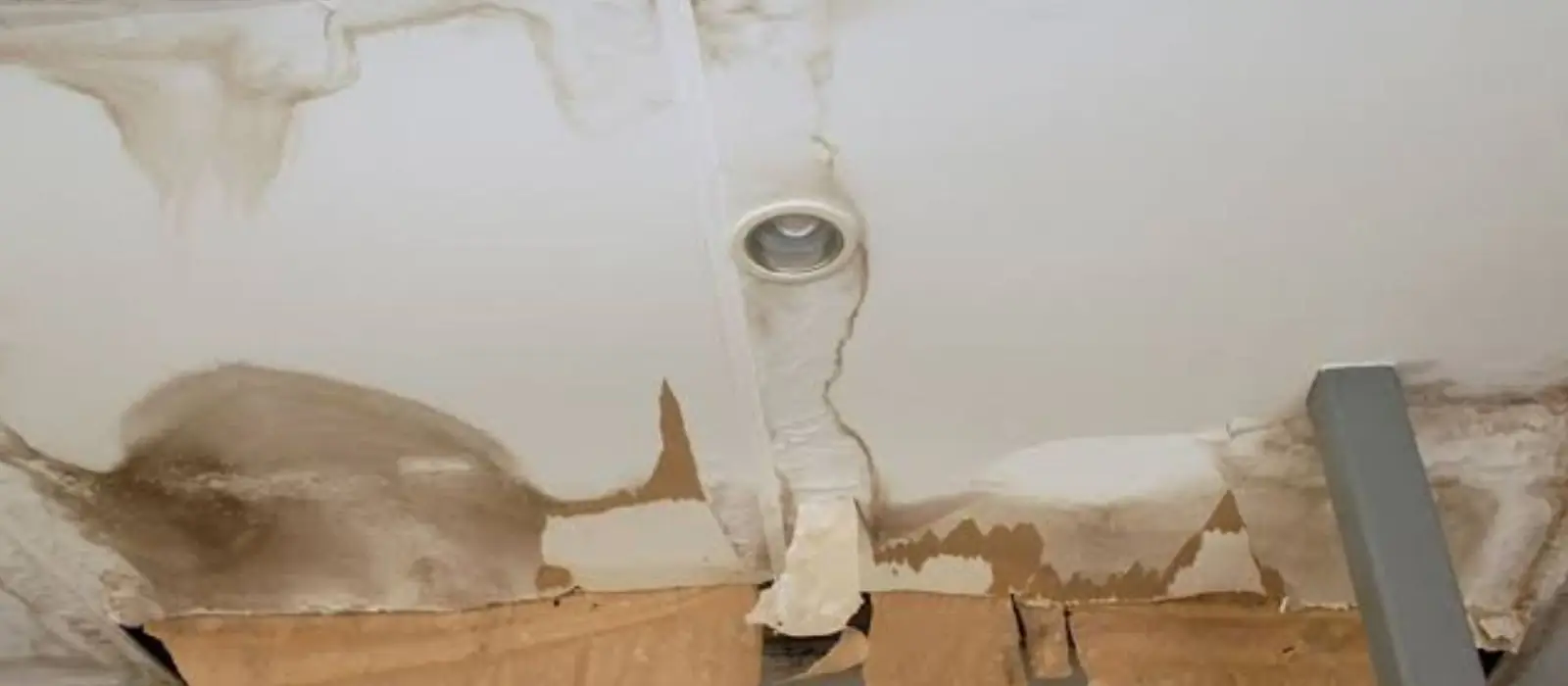
Ceiling damage from water usually shows up as a yellow or brown ring, peeling paint or a bulge. In Northborough, MA, the causes range from a roof leak in a winter thaw to a bathroom above. The ceiling is only where the water becomes visible, and the source is almost always somewhere else.
If the ceiling is sagging, stay out from under it. Drywall holding water is heavy and can fall without warning.
What the stain is telling you
| What you see | Likely cause | Urgency |
|---|---|---|
| Brown ring with a darker edge | Repeated wetting from a slow leak | Moderate, but find the source |
| Bulge or bubble | Water pooled above the drywall | Urgent, risk of collapse |
| Drips from a light fixture | Water reaching electrical wiring | Emergency, turn off the circuit if safe |
| Stain after rain or snowmelt | Roof, flashing or ice dam | Urgent in the next storm |
| Stain below a bathroom | Tub, shower, toilet or drain leak | Urgent, find the fixture |
What to do right now
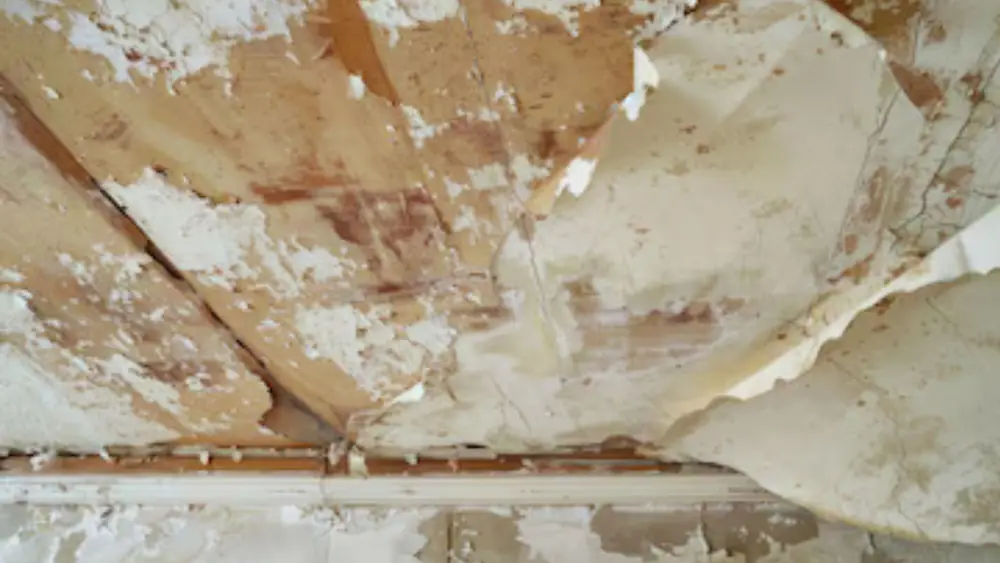
Move people and belongings out from under the affected area. If water is dripping, put a bucket below and spread plastic over furniture. If the ceiling is bulging with water, a small controlled hole can relieve it into a bucket, but only if no light fixture or wiring is nearby. If you are unsure, call a professional instead.
Turn off power to the room if the ceiling fixture is wet and you can reach the panel from dry footing. Photograph the damage. Then call the line. A crew can open the ceiling in a controlled way and dry the cavity.
Finding the source
Water travels. A drip on the ceiling may come from a joint several feet away, running along a rafter or a pipe before it drops. Moisture meters and a thermal camera show the wet area without opening everything.
If the source is a roof, a roofer fixes it. If it is plumbing, a plumber fixes it. Restoration comes after the source is stopped, because drying a ceiling that is still being rewetted is wasted effort.
Repairing the ceiling
A small stain on firm, dry drywall can be primed with a stain-blocking primer and repainted once the area is dry. A soft, sagging or crumbling ceiling is cut out, and the wet insulation above is removed. The patch is taped, finished, primed and painted.
Textured ceilings add a step, because the texture has to be matched. Plan for that when you ask for a scope. See water damage repair for the rebuild side and water mitigation for the drying side.
Mold above the ceiling
The EPA's drying window is 24 to 48 hours. A ceiling that stayed wet for days often has mold in the insulation above it. If you see dark spots or smell a musty odor, call before sanding or scrubbing.
Ceiling types and how they fail
| Ceiling | How it behaves when wet | Repair note |
|---|---|---|
| Painted drywall | Stains, sags and softens | Cut out wet sections, patch and finish |
| Textured or spray ceiling | Texture flakes and stains show through | Texture has to be matched after the patch |
| Plaster on lath | Cracks, loosens or falls in sheets | Needs a skilled plasterer, not a quick patch |
| Drop ceiling tiles | Stains and sags, tiles can be replaced | Replace tiles and check the grid above |
Some older textured ceilings have contained asbestos. If your house is old and the ceiling texture is original, have it tested before sanding, scraping or cutting. Ask your building department which rules apply to the work.
After the repair: stop the second leak
A repaired ceiling is only as good as the source repair. If the cause was a roof, ask the roofer what was found and fixed, and keep the invoice. If it was plumbing, keep the plumber's report. If it was an ice dam, address insulation and ventilation in the attic so it does not recur next winter.
Watch the ceiling for a few storms or a few weeks of normal use. A fresh ring around the patch means moisture is still present. Photograph the ceiling now and after the next rain, so you can compare.
Who to call first
A ceiling leak can involve three trades: a roofer if the water comes from outside, a plumber if it comes from a pipe or fixture and a restoration crew for the drying and repair. Calling in the wrong order wastes time.
If the water is active, call the restoration line first for emergency steps and containment. Then ask the crew whether the moisture readings point to the roof or to plumbing, so you know which specialist to call next.
Northborough note: winter roofs and ice dams
The Massachusetts Division of Insurance says ice dam damage may be covered if it is sudden and not caused by lack of maintenance. That is a useful line for Northborough homeowners, because a winter thaw followed by a freeze is the classic setup for water backing up under shingles and into ceilings.
Keep gutters clear and insulation and attic ventilation in good shape, and photograph the roof and ceiling when a leak appears. Houses near Berlin and Southborough with large roofs follow the same pattern.
Questions Northborough Homeowners Ask
Does my policy cover ice dam damage in Massachusetts?
It may be, when the damage is sudden and not the result of poor upkeep, according to state insurance guidance. Wording varies, so read your policy and call your insurer.
Can I paint over a ceiling stain?
Only after the leak is fixed and the ceiling is dry. Use a stain-blocking primer, because ordinary paint lets the stain bleed through.
Is a bulging ceiling an emergency?
Yes. Water pooled behind the drywall can bring the ceiling down. Stay out from under it, protect the floor and call.
How do I know the source is fixed?
A moisture meter reading that stays flat over several days, with no new stain after rain or use, is a reasonable sign. A restoration crew can take the readings.
Water coming through the ceiling? Call now.
☎ Call (508) 446-9244