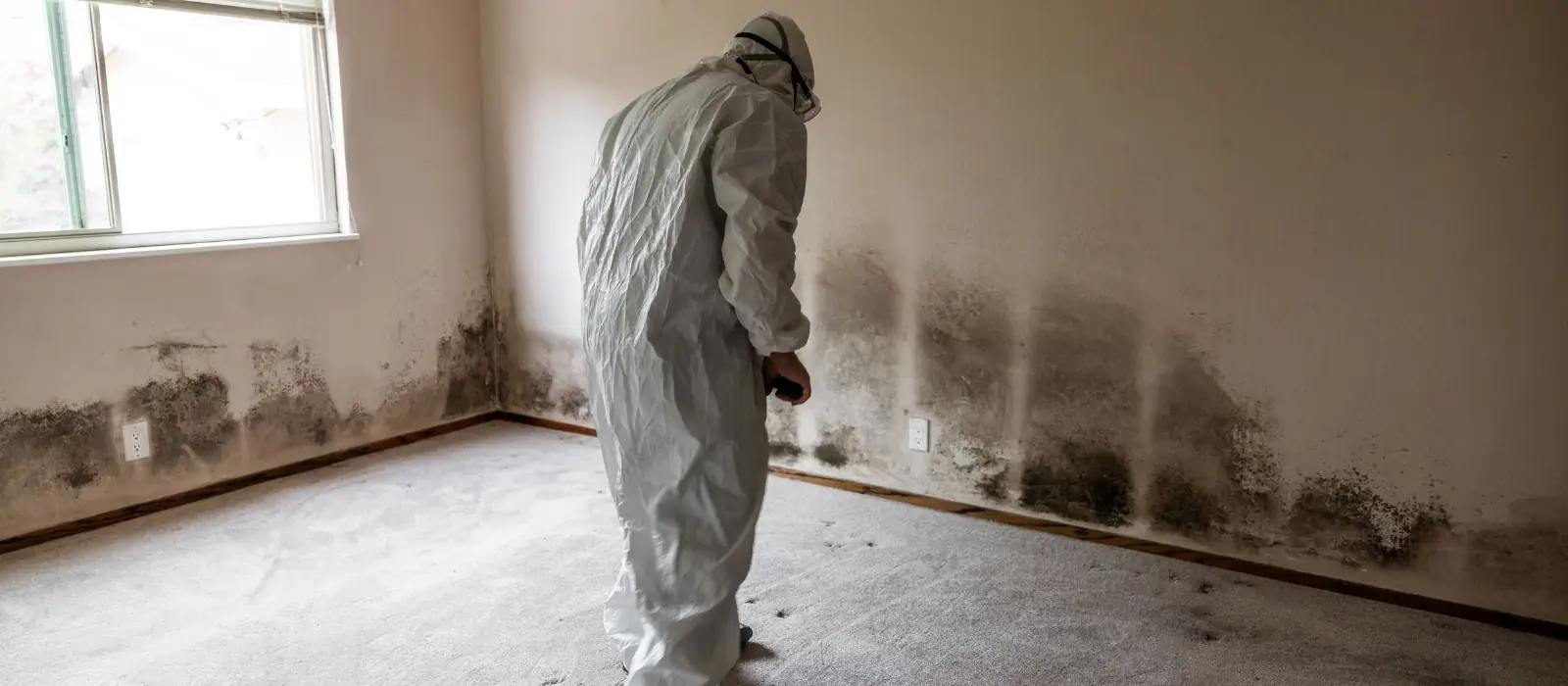
Getting rid of mold in a whole house is a different job from cleaning one bathroom ceiling. You need to find every area where moisture collects, decide what is salvageable and fix the conditions that fed the growth. A Northborough, MA house has the usual suspects: bathrooms, a basement, an attic, kitchen cabinets under sinks and windows that sweat in winter.
This guide goes area by area, so you can build a plan before you spend money.
Area by area
| Area | Usual cause | First step |
|---|---|---|
| Bathroom | Steam, weak fan, shower leak | Fix ventilation, check for leaks |
| Basement | Humidity, seepage, floods | Dehumidifier, drainage check, flood restoration if flooded |
| Attic | Warm air leaking into cold space | Air sealing and ventilation |
| Under sinks | Slow supply or drain leaks | Replace fittings, dry cabinet base |
| Windows | Condensation on cold glass | Wipe, improve airflow |
| Closets on exterior walls | Cold walls and stagnant air | Space items off walls, check insulation |
| HVAC | Condensate and dirty components | Specialist assessment |
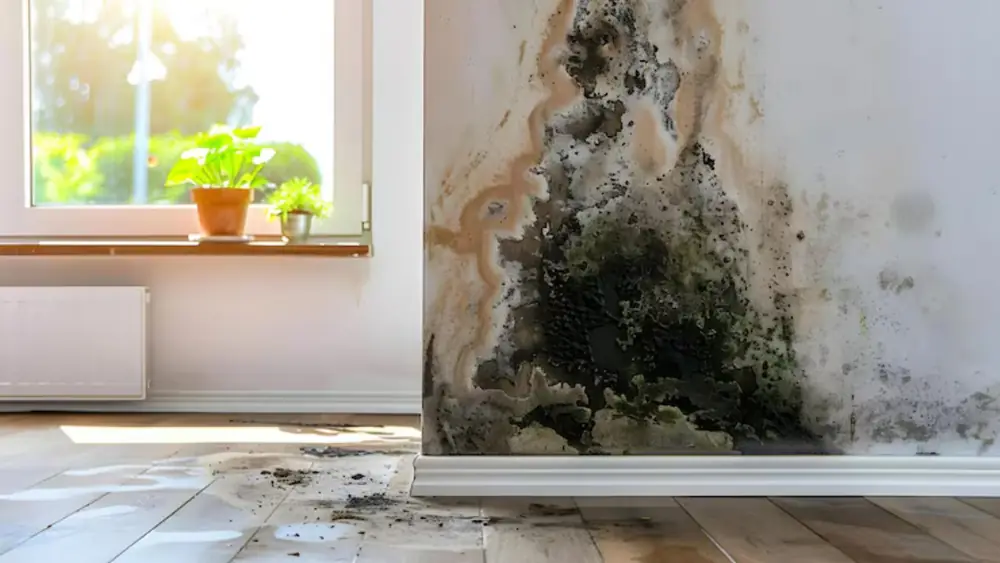
Build your plan in the right order
- 1
Stop active water
Fix leaks first. Nothing else lasts without it.
- 2
Map the problem
Use a moisture meter, and a professional inspection if the extent is unclear.
- 3
Decide what is salvageable
Hard surfaces are cleaned, and porous materials are removed.
- 4
Do or hire the cleanup
Small jobs are doable, while large ones need containment.
- 5
Dry the structure
Dehumidifiers and airflow bring materials back to dry readings.
- 6
Prevent the return
Ventilation, humidity control and fast response to leaks.
The role of testing
EPA guidance treats sampling as optional when mold is plainly visible and notes that surface sampling can confirm a cleanup worked. Testing is no substitute for finding the moisture. Independent clearance testing, done by a party other than the remediation company, is a common choice after a larger job.
When to bring in a professional
Call a professional when mold covers more than about 10 square feet, when it has returned after cleaning, when it follows a flood or sewage backup or when it is in the HVAC system. Our mold remediation page describes the process, and emergency water removal covers the active water side.
What to avoid
Do not use fogging or sprays as the only treatment, do not paint over mold and do not mix cleaning chemicals. Do not promise yourself that mold will never return, since only moisture control keeps it away.
A seasonal prevention checklist
| Season | What to check |
|---|---|
| Winter | Attic frost and ice dams, bathroom fans, cold exterior walls and closets |
| Spring | Foundation seepage after thaw, sump pump test, gutters and downspouts |
| Summer | Basement humidity, dehumidifier drain, air conditioner condensate lines |
| Fall | Roof and flashing check, clean gutters, seal gaps before the heating season |
A short check every season catches most problems early. Fix small leaks the day you find them, and dry anything that gets wet within the first day or two.
If a sale or a loan depends on it
Buyers and lenders sometimes ask for mold to be addressed before closing. The sensible path is to find and fix the moisture, remediate the affected area, document with photographs and moisture readings and, if the buyer or lender wants it, arrange independent clearance testing by a party other than the remediation company.
We cannot promise what a lender will accept. Ask the lender or the buyer's agent what they require, and keep every record. A clear paper trail is more useful than a verbal assurance.
Living in the house during cleanup
For small jobs with the room closed off, people usually stay. For larger jobs, containment and negative air keep the work area separate, but noise, dust and access to rooms may change. Ask the crew how long each room will be unavailable.
People with health concerns should talk to a physician before deciding whether to stay. A remediation company can plan the work, but it does not give medical advice.
Rentals and shared buildings
If you rent, tell the landlord in writing and keep photographs with dates. Massachusetts guidance says tenants can contact the local board of health to request an inspection of unsafe or unsanitary conditions. In a shared building, mold in one unit may point to a leak elsewhere, and the owner has to address the source.
Northborough note: old basements and musty smells
A musty smell in an older basement is not always mold. It can come from damp stone or concrete, a floor drain without water in the trap or stored items that have absorbed moisture. A humidity reading and a look behind stored boxes tell you more than the smell alone.
If the smell comes with visible spots, a damp floor or wall, or follows a storm, it is time for an inspection. Crews serve nearby Marlborough and Shrewsbury the same way.
Questions Northborough Homeowners Ask
Is a musty smell in an older Northborough basement always mold?
No. Damp stone, concrete and stored items can smell musty without visible growth. It still signals moisture, so measure humidity and look for the source.
Can I get rid of all the mold in my house permanently?
No one can promise that. Mold spores are everywhere, and growth depends on moisture. Removing the moisture and the damaged materials is what keeps it away.
Should I move out during remediation?
It depends on the size and location of the work. A professional will advise, and your physician can answer health questions.
Do ozone machines and fogging remove mold?
They do not fix the moisture or remove contaminated materials. They are not a substitute for removal.
Mold in several rooms? Call for an inspection.
☎ Call (508) 446-9244