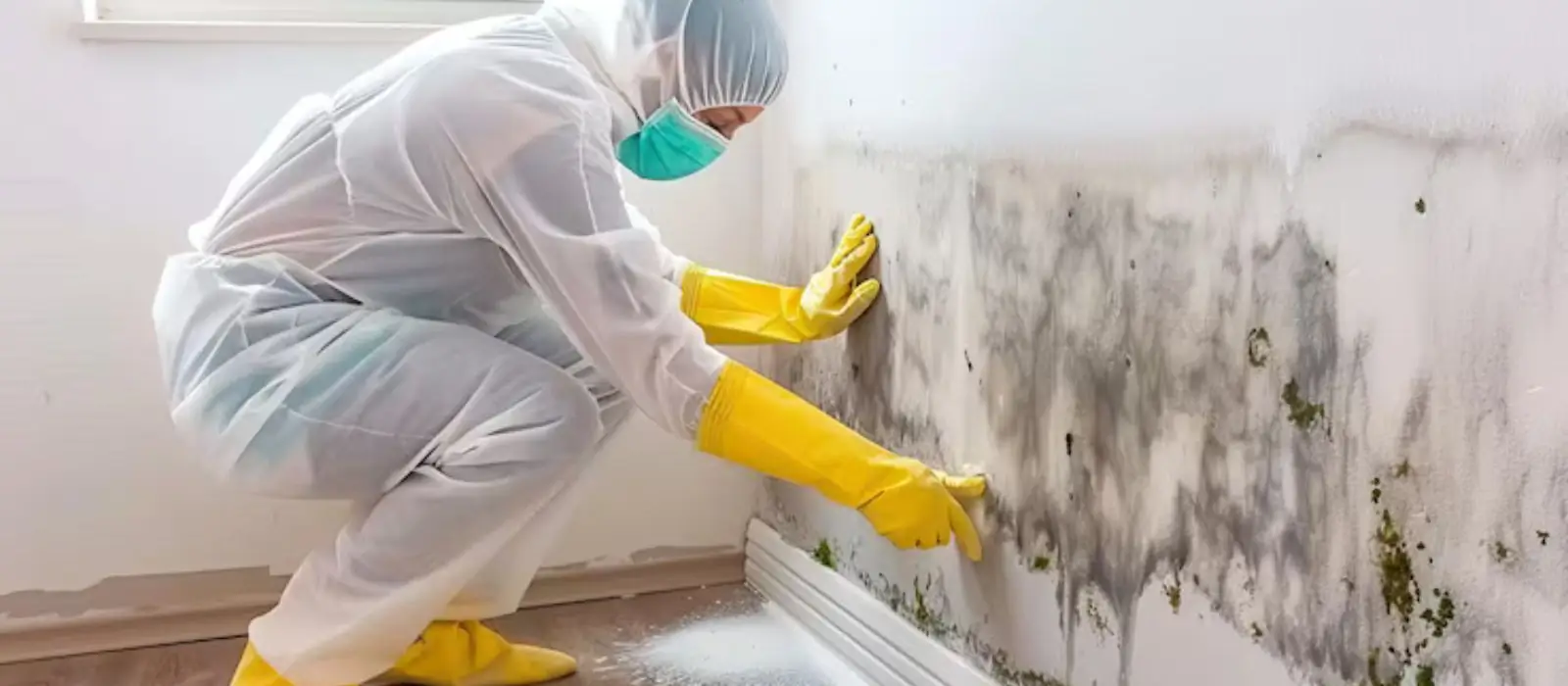
Mold removal is mostly moisture control. Cleaning the visible spots is the easy part, and it only lasts if the water source is fixed. In a Northborough, MA home, that usually means a leaky pipe, a cold wall, a damp basement or a bathroom without good ventilation.
This guide covers how to decide between DIY and professional help, and how to do the small jobs safely.
Step one: find and stop the moisture
The EPA states that none of the many types of mold will grow without water or moisture. That is both the explanation and the plan. Look for leaks, condensation, wet insulation and humid basements.
Fix plumbing leaks as soon as possible, repair roof leaks and dry any wet material. If you cannot find the source, a moisture meter and thermal camera will.
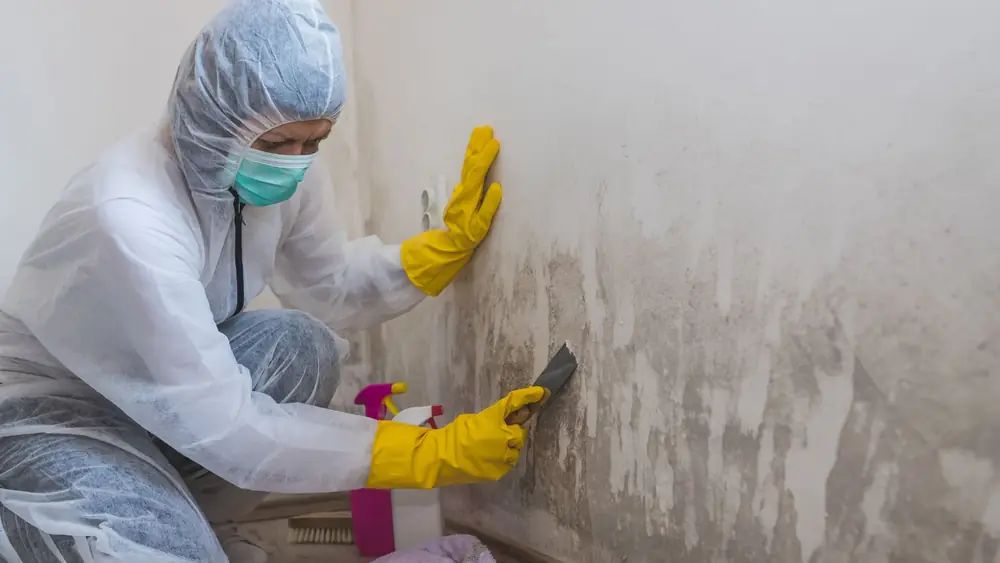
Step two: decide who does the cleanup
| Situation | Who handles it |
|---|---|
| Small area, hard surface, leak fixed | Homeowner, with protection |
| Porous materials such as drywall, ceiling tile or carpet | Usually removed and replaced |
| More than about 10 square feet | Professional |
| Mold in the HVAC system | Specialist |
| Following sewage or flood water | Professional |
| Anyone with health concerns | See a physician and use a professional |
Step three: safe small-area cleanup
Wear an N95 respirator, gloves and goggles. The EPA recommends scrubbing mold off hard surfaces with detergent and water, then drying completely. Do not mix bleach with other products, and do not use a household vacuum.
Porous items, such as ceiling tiles, wet carpet and moldy drywall, are removed in bags and replaced.
Step four: professional remediation
For larger jobs, a crew sets up containment, uses negative air, removes materials, cleans the framing and dries the structure. Our mold remediation page walks through the process, and the S520 standard is the published reference. Ask whether any company works to it and who will do clearance testing.
If the mold came from a recent leak, dry the structure with water mitigation first.
Step five: keep it from returning
EPA guidance puts the upper limit for indoor humidity near 60 percent. Use exhaust fans in bathrooms and kitchens, run a dehumidifier in damp basements, clean gutters and fix grading so water drains away from the foundation. Avoid carpet in basements that get damp.
What can be cleaned and what is replaced
| Material | Usual treatment |
|---|---|
| Glass, tile, metal and sealed wood | Clean with detergent and water, dry completely |
| Painted drywall with light surface growth | May be cleaned if firm and dry, otherwise removed |
| Ceiling tiles and insulation | Removed and replaced |
| Carpet and pad | Removed if moldy |
| Upholstery and mattresses | Usually discarded when moldy |
| Books and paper | Often discarded, valuable items need specialists |
Mold removal myths
- Painting over mold does not remove it, and the stain returns through the paint
- Bleach is not a substitute for fixing the moisture, and it should never be mixed with other cleaners
- You cannot tell mold type or risk by color alone
- Fogging or air fresheners cover odor without removing the material
- Opening windows helps only when the outdoor air is drier than the indoor air
Each of these myths leads to the same result, which is a clean-looking surface and a moisture problem that continues underneath. If a company promises that mold will never return, treat that as a warning sign.
Mold after a flood or sewage backup
Mold after a flood is a different case. Floodwater and sewage carry bacteria and silt, and the materials involved are usually removed rather than cleaned. Do not try to clean a flooded basement without protective gear, and do not run the HVAC system through a contaminated area.
Start with the flood damage restoration page, which explains the categories and the safety steps, then follow with mold cleanup once the structure is dry.
Setting expectations
Mold removal is not a one-visit fix. The sequence is inspection, containment, removal, drying and a final check, and each step has to finish before the next. A company that promises a same-day cure for a large problem is cutting steps.
Ask how long drying will take, who checks the final result and what happens if the readings do not come down.
Northborough note: summer basements
In a New England summer, warm humid air meets cool basement walls, and condensation forms. That is one of the common reasons basements smell musty in July even without a leak. A dehumidifier sized for the space, with a hose to a floor drain, handles most cases.
If a basement stays damp after dry weather, moisture is entering from outside, and that is a drainage question. Crews also see this pattern in Westborough and Southborough.
Questions Northborough Homeowners Ask
Do Northborough basements need a dehumidifier?
Many New England basements run humid in summer. A dehumidifier that keeps humidity below about 60 percent, the EPA's guide, helps prevent mold. If it runs constantly, look for a moisture source.
Does mold need to be tested before removal?
Usually not. The EPA's position is that visible mold does not call for sampling, though surface sampling can confirm an area was cleaned well.
Is it safe to stay in the house during cleanup?
For small jobs with the room closed, usually yes. For larger jobs, a professional will advise on containment. Health questions belong with your physician.
How long does remediation take?
Small jobs take hours, and larger ones take days, including drying. Readings decide when it is done.
Not sure how big the mold problem is? Call for an inspection.
☎ Call (508) 446-9244