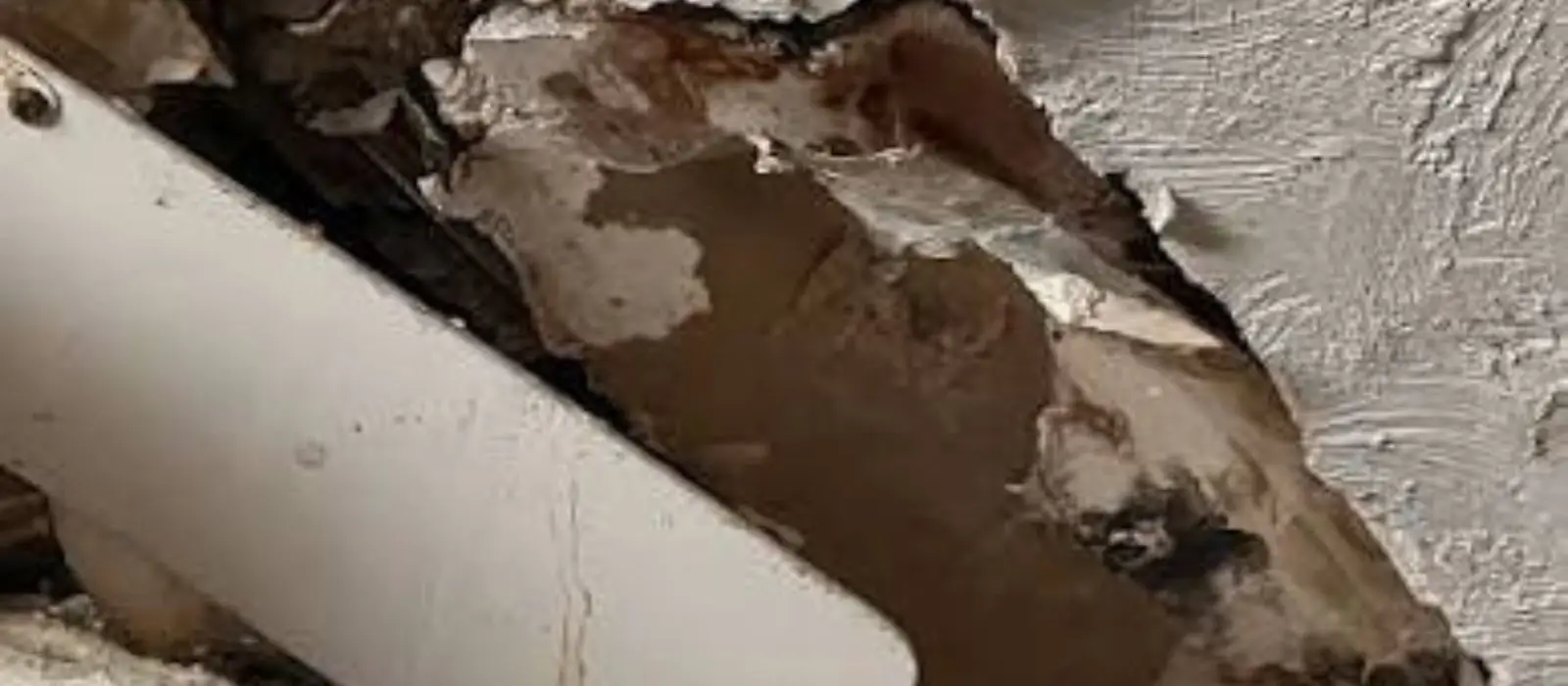
Sheetrock, also called drywall, is a gypsum core wrapped in paper, and it loses strength fast when it gets wet. Sheetrock water damage repair in Northborough, MA starts with deciding whether the board can be dried in place or has to be cut out. That decision depends on how long it was wet, what kind of water it was and what is behind it.
Paper facing is also food for mold when it stays damp.
Dry it or cut it out?
| Condition | Usual decision |
|---|---|
| Firm, flat, wet less than a day, clean water | Often dried in place |
| Soft, swollen or crumbling edges | Cut out |
| Stained through with a dark ring | Cut out and check the cavity |
| Contaminated by sewage or flood water | Cut out |
| Wet insulation behind it | Cut out and replace insulation |
| Mold on the surface and behind | Contain and remove |
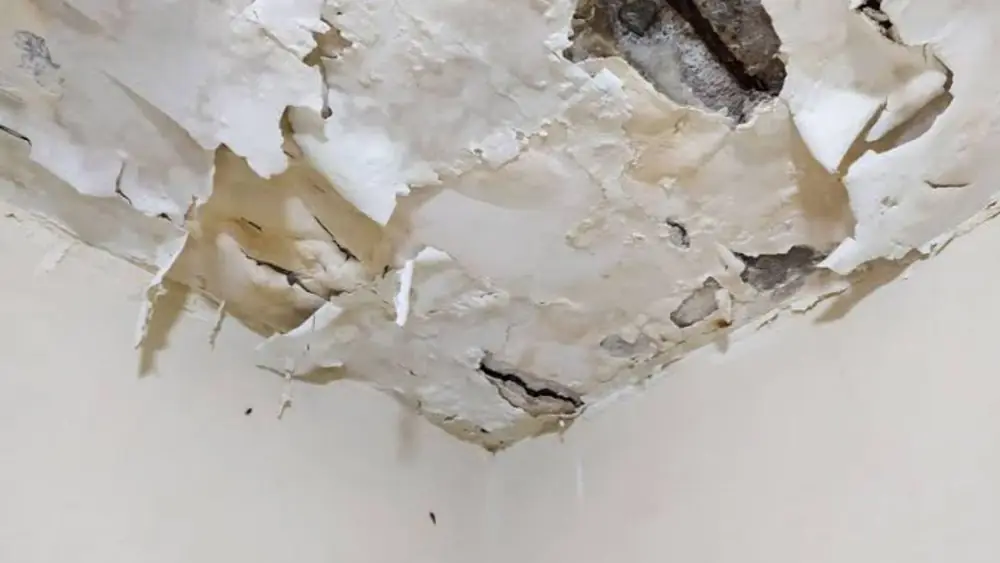
How a clean repair is made
- 1
Stop the water and dry the cavity
Moisture readings must be normal before anything is closed.
- 2
Cut out the damaged section
The cut is made along studs or in straight lines above the wet mark, so the patch lands on solid framing.
- 3
Replace insulation if wet
Fiberglass and cellulose hold water and are replaced when saturated.
- 4
Install new sheetrock
The patch is screwed to framing, taped and finished with joint compound in thin coats.
- 5
Prime and paint
A stain-blocking primer helps, and the whole wall is often repainted to avoid a visible patch.
Texture, trim and baseboards add steps. Matching an existing texture is a skilled job, and plan for it if the wall is visible from a living space.
Cut height and why crews cut higher
Water wicks upward in drywall above the visible line. Crews usually cut above the highest moisture reading, and sometimes make a straight horizontal cut a bit higher for a clean seam. A meter shows where the wet edge is.
Cutting only to the visible stain leaves wet board behind, and a repair over wet board can hide mold.
Mold and sheetrock
Past the 24 to 48 hour drying window the EPA describes, check both faces of the board. If mold is present, see the mold remediation page before demolition, because cutting into moldy board spreads spores. The EPA also says visible mold generally does not need sampling.
Older homes: plaster and old paint
Not every wall is sheetrock. Older houses often have plaster on lath, which dries differently and cannot be patched the same way. Materials in older houses can also include lead paint or asbestos in some old products, so have suspect materials tested before cutting or sanding. The EPA's lead-safe work rules apply to contractors working in homes built before 1978.
Tell the crew the age of the house on the first call. The related water damage repair and water damage cleanup pages cover how scopes are set.
Tools and materials for a small patch
- Utility knife, drywall saw and a straightedge
- Moisture meter or a meter rental to confirm the wall is dry
- Replacement drywall in the correct thickness
- Screws, drywall tape and joint compound
- Taping knives in two or three widths, and a sanding block
- Stain-blocking primer and matching paint
- N95 respirator, gloves and eye protection
Moisture-resistant board in wet rooms
In bathrooms and laundry rooms, builders often use moisture-resistant drywall behind tile or on ceilings. It resists humidity better than ordinary board, but it is not waterproof, and it fails under a real leak like any other drywall. Tile areas typically use cement board.
When you replace a section, ask what was there before and use the right product. Replacing a cement board backer with ordinary drywall is a mistake that fails the next time the shower leaks.
Matching texture and finishing
Taping and finishing take three thin coats with drying time between them, each feathered wider than the last. Sand lightly and prime before painting. Texture is the hardest part. If the wall has a pattern, test the matching technique on scrap before you apply it to the wall.
Painting the full wall, corner to corner, hides the patch better than painting only the repair. Use the same sheen as the original.
When to leave it to a professional
A patch smaller than a dinner plate on dry, firm board is a fair DIY task. Larger sections, wet insulation, visible mold or any wiring in the wall are reasons to call. The same goes for ceilings, since working overhead with wet board is awkward and unsafe.
A professional also brings moisture meters, containment and disposal, which matter more than the taping and painting.
Northborough note: pre-1978 houses
Northborough is an old New England town, and many of its houses were built long before 1978. If yours was, lead paint is a real possibility on trim and walls, and the EPA's Renovation, Repair and Painting rule requires lead-safe practices from contractors in those homes.
Ask any contractor if they follow it. Houses in Shrewsbury and Marlborough have the same issue, since much of that housing dates from the early and middle twentieth century.
Questions Northborough Homeowners Ask
My Northborough house predates 1978. Is there anything to know before cutting wet drywall?
Yes. Older paint can contain lead, and some old joint compounds and plasters have contained asbestos. Test suspect materials first, and ask contractors whether they follow the EPA's lead-safe work rules.
Can I patch wet sheetrock with joint compound?
Not until it is dry. Compound over wet board will not hold and can trap moisture.
How big can a patch be before I call a professional?
A small, dry patch is a reasonable DIY job. Large sections, wet insulation, mold or any electrical wiring in the wall are reasons to call.
Will new sheetrock match my existing texture?
It can, but it takes skill. Ask the contractor to show the matching technique before the job begins.
Wet or swollen sheetrock? Call and describe it.
☎ Call (508) 446-9244