
People who search for what black mold smells like are usually standing in a room that smells wrong. The common descriptions are musty, earthy, like damp soil, wet cardboard or an old basement. The smell comes from compounds released by growing mold and by the damp materials it grows on.
In a Northborough, MA home, that smell is most often noticed after rain, in a closed bathroom or when you open a closet that has been shut for weeks. A smell is a clue, not a diagnosis.
What the smell tells you, and what it does not
| Smell | Possible meaning | Next step |
|---|---|---|
| Musty, earthy | Damp materials, possibly mold | Check humidity and look for moisture |
| Sour or rotten | Standing water, drain trap, trapped moisture | Inspect drains and low spots |
| Strong chemical | Not mold, possibly cleaners or materials | Ventilate and identify the source |
| Sewage | Drain or sewer problem | Treat as contaminated, see flood damage restoration |
| Smell appears after rain | Moisture entering from outside | Check gutters, grading, foundation |
You cannot tell the type of mold by smell, and color does not tell you either. What you can tell is that moisture is probably present, which is what mold needs.
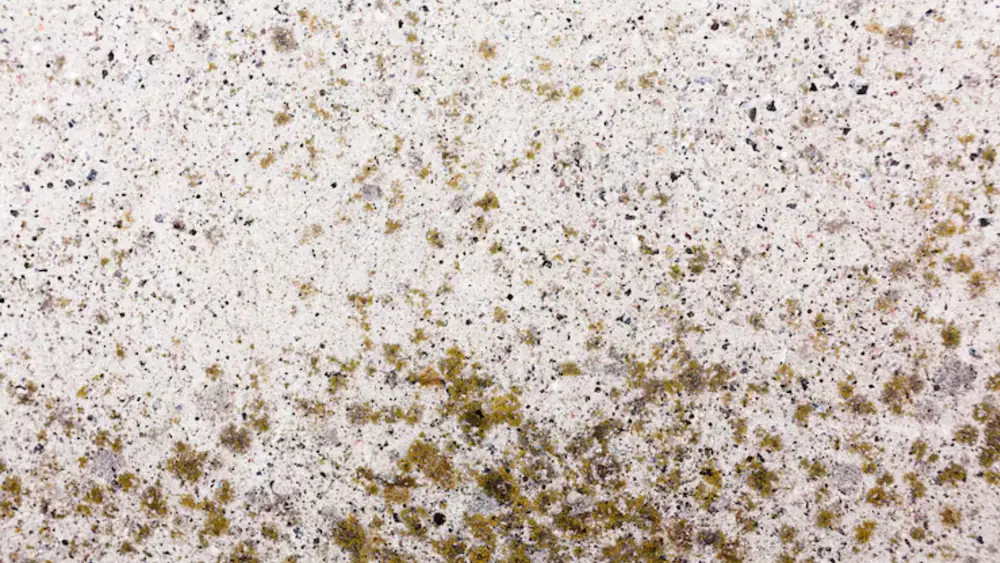
Where the smell hides
Odors collect behind walls, under flooring, in HVAC ducts, inside cabinets and in carpet pad. If you cannot see the source, a moisture meter and a thermal camera show where to look. The smell may be strongest in a room that is not the source, because air moves.
Pulling off baseboards or lifting a corner of carpet sometimes reveals the answer. Do not cut into walls until you know what is behind them.
What to do first
- 1
Find water
Check for leaks, wet spots, condensation and a humid basement.
- 2
Measure humidity
A reading above roughly 60 percent, the EPA's upper limit, fits a musty smell.
- 3
Dry and ventilate
Run a dehumidifier, open windows when dry and move items away from walls.
- 4
Inspect
If the smell stays or you find hidden moisture, book an inspection.
- 5
Remove what is contaminated
Porous materials with mold are replaced, which is covered under mold remediation.
Smell and health
Odors can bother people for many reasons. If anyone in the house feels ill and you suspect mold, talk to a physician. A restoration company can fix the moisture and the damaged materials, but it does not diagnose health conditions.
Testing
With a smell and nothing visible, a moisture inspection is usually a better first step than an air test, and EPA guidance treats sampling as unnecessary where mold is plainly visible. See water mitigation if you found a recent leak, since drying comes first.
Keep a smell diary
Odors come and go, and writing them down helps the inspector. Note the date, the room, the time of day, the weather, whether anyone has showered or run the dishwasher and how strong the smell is. After a week, a pattern often shows up.
A smell that is strongest after rain points to outside moisture. One that appears only after showers points to the bathroom or its fan. One that is constant points to a continuous source such as a slow leak or a damp material.
Smells that are not mold
Not every bad smell is mold. A dry floor drain trap can let sewer gas into a basement, and pouring water into the drain often fixes it. A fridge or garbage disposal can produce a sour odor. New materials give off chemical smells.
A rotten-egg smell can be natural gas, which has an additive that smells like that. If you smell gas, leave the house and call the utility or 911 from outside. Do not turn on lights or use a phone inside.
When an odor is an emergency
Sewage smells with water coming up from a drain, any gas smell and any smell with active flooding are emergencies. For the rest, a short inspection is usually enough. A moisture meter and a camera tell you more than a nose can.
What the inspection will cover
An inspection for a musty smell starts with questions about when the smell appears. Then comes a moisture survey of the rooms, a look at the basement, attic, bathrooms and HVAC, and thermal imaging of suspect walls and ceilings.
The result is a map of where moisture is present, a plan for drying and, if mold is found, a plan for containment and removal. It gives you facts to decide on, instead of a guess based on a nose.
Northborough note: when rain brings the smell
If your basement smells musty only after heavy rain, water is likely entering through the foundation, a window well or a drain, or the soil next to the wall is holding water. Check that gutters and downspouts empty away from the house and that the ground slopes away from the foundation.
If water has actually entered, restoration begins with removal and drying, and neighbors in Westborough and Berlin see the same pattern near low ground.
Questions Northborough Homeowners Ask
My Northborough basement smells musty only after rain. What does that mean?
Water is probably entering through the foundation or the soil is holding moisture. Check gutters and grading, then have moisture readings taken if the smell persists.
Does black mold have a special smell?
No. People describe it as musty or earthy, but many molds smell similar, and some produce little odor.
Can an air test tell me what is causing the smell?
It can show spore levels, but it does not find moisture. A moisture inspection is usually the better first step.
Will an air freshener fix the smell?
No. It covers the odor while the moisture continues.
Smell that will not go away? Call for an inspection.
☎ Call (508) 446-9244